Categories: Boxelder Bugs, Home Protection Plan, Pest Control
Read time: 5 minutes
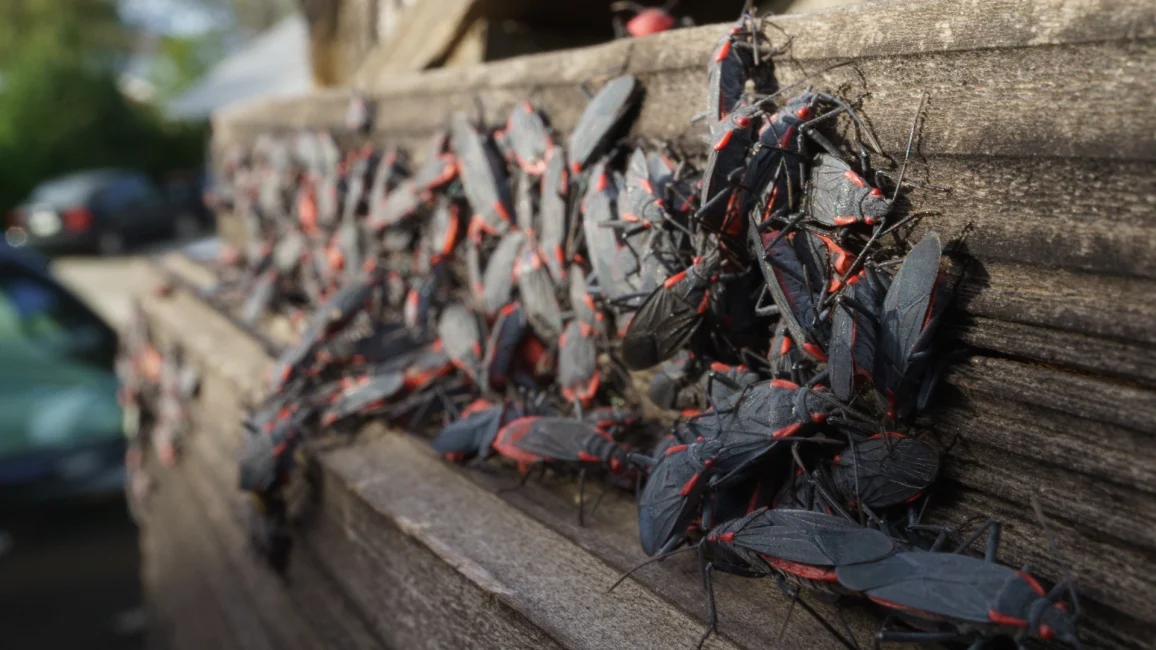
Have you ever found a bunch of red-and-black bugs soaking up the sun on your siding?
You might know them as boxelder bugs, but here’s the surprising part: there are actually two species you could be looking at. Eastern and western boxelder bugs look so much alike that telling which one you’ve found isn’t always easy.
So, what’s the clue that tells them apart? And does it actually matter which kind has gathered around your home?
Let’s look at the differences between these two lookalikes, where each species is found, and what those differences mean for homeowners.
How to Identify a Boxelder Bug
Before figuring out whether you’ve found an eastern or western boxelder bug, let’s make sure you’ve found a boxelder bug in the first place!
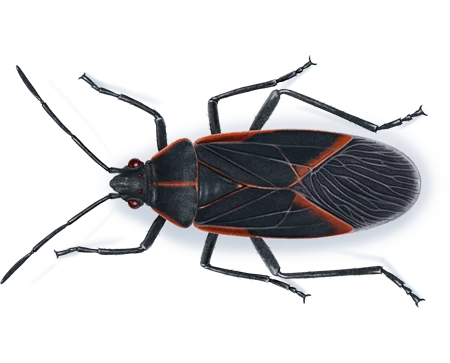
Adult boxelder bugs are about half an inch long, with flattened, elongated bodies. Look for these characteristics:
- Dark, elongated body
- Red or reddish-orange markings along the wings
- Three red lines behind the head
- Reddish abdomen beneath the wings
Young boxelder bugs, called nymphs, look quite different. They’re bright red and wingless when they hatch, gradually developing darker markings and wing pads as they mature.
How to Tell Eastern and Western Boxelder Bugs Apart
The biggest difference between eastern and western boxelder bugs is the color of their wing veins.
Eastern boxelder bugs (Boisea trivittata) have dark or nearly black wing veins, while western boxelder bugs (Boisea rubrolineata) have reddish-orange veins.
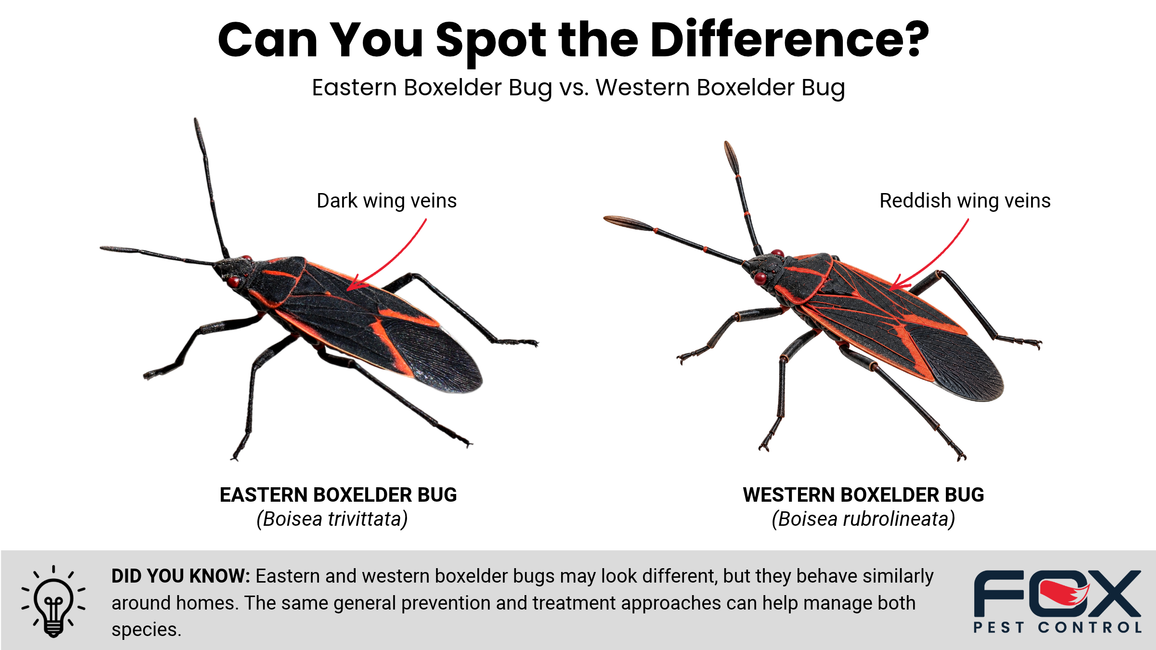
It’s a subtle distinction that’s difficult to spot without a close-up view. Fortunately, both species behave similarly around homes, so identifying the exact species usually isn’t necessary when addressing boxelder bug activity.
What About Brown Boxelder Bugs?

Yes! Although boxelder bugs are typically described as black with reddish-orange markings, some adults may appear dark brown or brownish-black.
If you’ve found a brown insect that resembles a boxelder bug, look at its shape and markings. Boxelder bugs have elongated bodies with distinctive red lines, while brown marmorated stink bugs have broader, shield-shaped bodies and mottled brown coloring.
Checking these features can help you determine which insect you’ve found.
Spiders
Rodents
Cockroaches
Ants
And More
Save $50 on your first Home Protection Plan service
Protect your home from common household pests all year long.
Get $50 off your initial Home Protection Plan service and enjoy peace of mind.
Where Do Western and Eastern Boxelder Bugs Live?
Despite their names, eastern and western boxelder bugs don’t divide the country neatly in half. Their ranges overlap in some areas, so where you live can give you a clue, but it isn’t enough to identify the species on its own.
Eastern boxelder bugs are common across much of the eastern and central United States and Canada, while western boxelder bugs are more common across the western United States and parts of western Canada.
Both species are associated with boxelder trees and can also be found around other maple trees. They’re especially associated with female boxelder trees, which produce the seeds the bugs feed on.
Boxelder Bugs in Utah and the Mountain West
If you’re in Utah or somewhere else in the Mountain West, you might assume any boxelder bug you find is the western species. But here’s the interesting part: eastern boxelder bugs have also been documented in Utah.
That means even in the West, location alone can’t tell you which species you’re looking at.
Want to know for sure? Those tiny wing veins we talked about earlier are a much better clue than your ZIP code.
Are Boxelder Bugs Invasive?
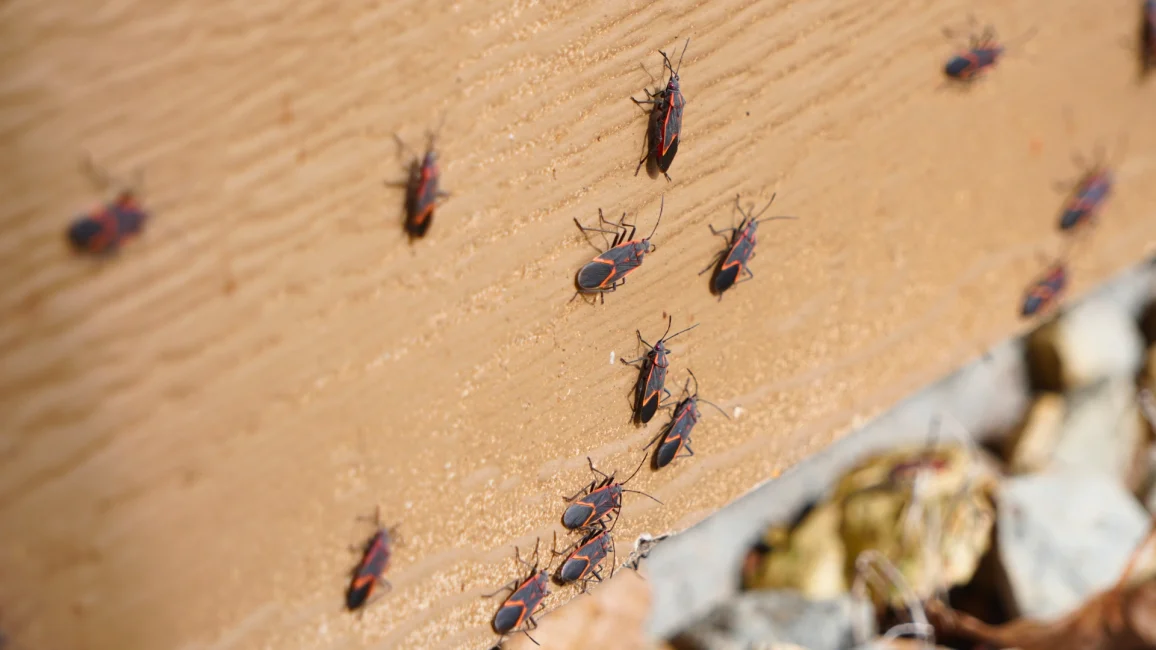
When you see hundreds of boxelder bugs covering the side of your house, “invasion” might be the first word that comes to mind! And honestly, when they’re crawling all over your siding, windows, and doors, it’s natural to think so.
But there’s a difference between bugs invading your home and a species being considered invasive.
Boxelder bugs are native to North America and occur throughout their natural ranges. Gathering around buildings to find shelter doesn’t make them an invasive species.
So, what makes a species invasive? An invasive species is introduced to an area where it isn’t native and spreads in a way that can cause ecological or agricultural harm.
For comparison, brown marmorated stink bugs are native to Asia and are considered invasive in North America.
What Eats Boxelder Bugs?
With all those boxelder bugs hanging around, you might think the local birds and spiders would be having a feast!
Not quite. Boxelder bugs do have natural predators, including spiders, praying mantises, some birds, and certain rodents. However, these insects have a few defenses that may make them less appealing to some predators.
For starters, boxelder bugs can:
- Give off an unpleasant odor when disturbed or crushed.
- Use chemical defenses that may deter some predators.
- Use their red and black coloring as a possible warning to predators.
Of course, these defenses don’t make boxelder bugs impossible to eat. Natural predators still play a role in the ecosystem, but they may not keep large gatherings of boxelder bugs from forming around your home.
In other words, if you’re hoping the neighborhood birds will take care of a boxelder bug gathering, you probably shouldn’t count on it!
How to Keep Boxelder Bugs Out of Your Home
Whether you’ve spotted eastern or western boxelder bugs, the steps you can take to reduce their activity around your home are generally the same.
Start by checking window screens, doors, and other potential entry points for gaps. Seal openings where possible, especially around windows, utility penetrations, and exterior siding. Pay attention to where boxelder bugs gather, since those areas may offer clues about how they’re getting inside.
If boxelder bugs keep showing up around your home, Fox Pest Control technicians can help identify areas of activity and recommend an approach for managing them. Boxelder bugs are covered under our Home Protection Plan, which includes ongoing treatments designed to help manage common household pests throughout the year.
Whether it’s a western or eastern boxelder bug, the goal is the same: keeping them outside where they belong!
Ready to get rid of pests? Reach out today!


